
Turn food scraps and yard waste into something useful!
Composting at home is a simple way to reduce household waste and create nutrient-rich material for your garden and landscape. With the right balance of organic materials, moisture and air, you can turn everyday food scraps and yard waste into finished compost.
🌱 The 4 Ingredients for Successful Composting
🥬 Greens — Nitrogen
- Fruit & vegetable scraps
- Grass clippings
- Coffee grounds & paper filters
- Crushed eggshells
- Fresh plant material
🍂 Browns — Carbon
- Dry leaves
- Shredded paper
- Plain cardboard
- Straw
- Small twigs
- Untreated wood chips
💧 Water
Keep your compost about as damp as a wrung-out sponge.
🌬️ Air
Turn or mix your pile periodically to introduce oxygen and encourage decomposition.
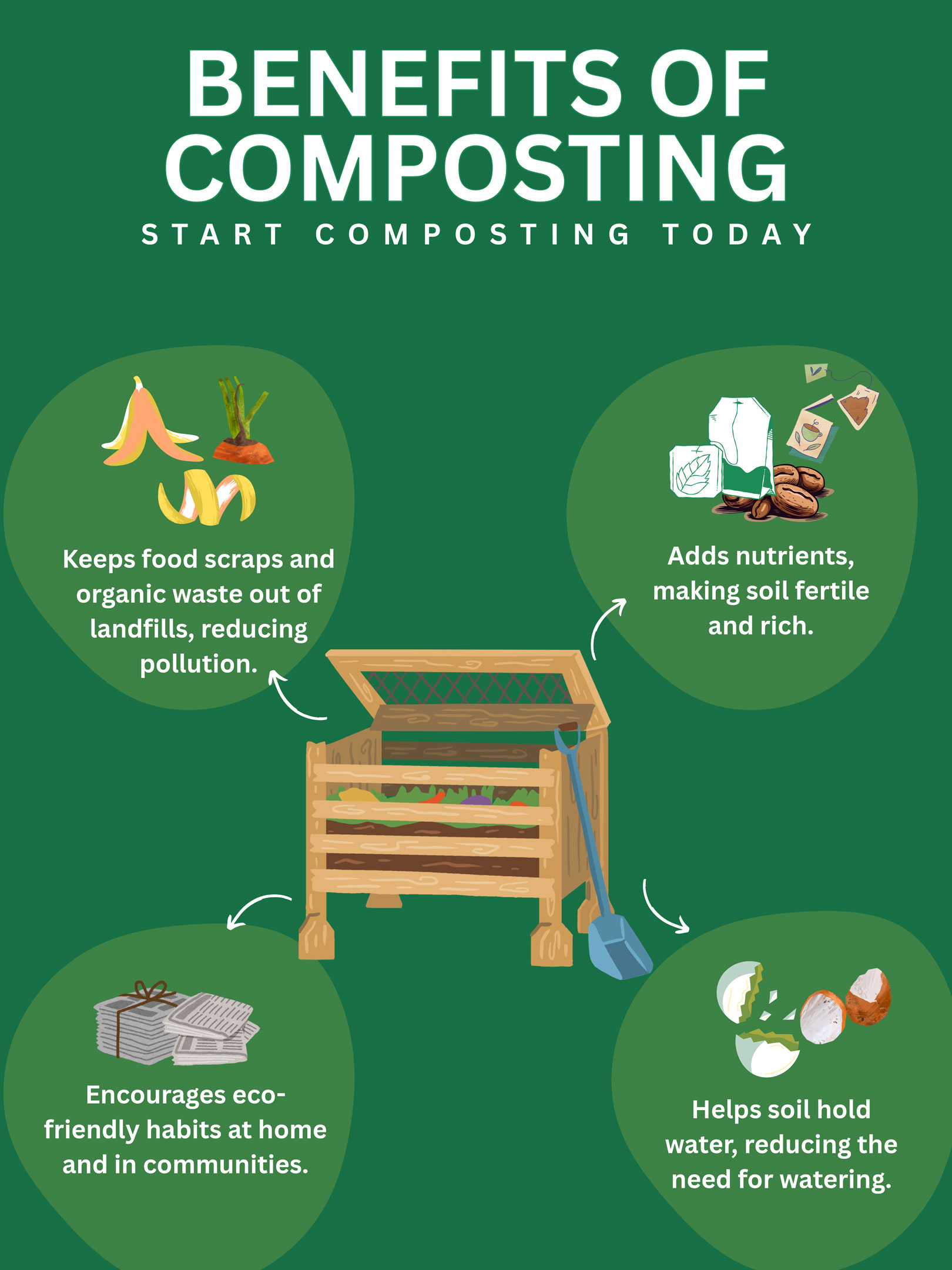
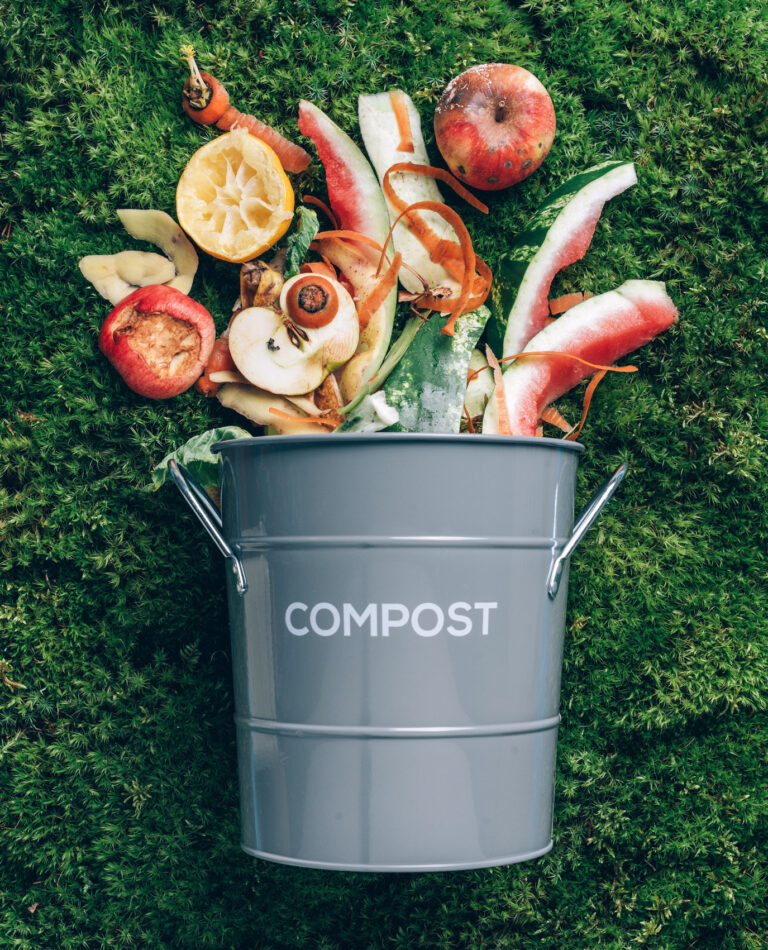
Composting Tips
-
1. Balance your greens and browns Aim for approximately 2–3 parts browns to 1 part greens by volume. Cover fresh food scraps with several inches of brown material to help control odors and pests.
-
2. Keep it moist — but not soggy Too much water can create odors and slow decomposition. If your pile is too wet, add dry leaves or shredded cardboard. If it's too dry, add a little water.
-
3. Give it some air Turn or mix your compost periodically. Good airflow helps microorganisms do their job and prevents unpleasant odors.
-
4. Choose a convenient location Place your compost bin or pile in a well-drained area that is convenient to access. Choose a system that fits the amount of material you generate and the space available.
-
5. Chop it up Cutting larger food scraps and yard materials into smaller pieces can help them break down faster.
🚫 WHAT NOT TO COMPOST
NO PLASTICS. NO TRASH.
Do not put the following in your backyard compost:
❌ Plastic bags or packaging
❌ Plastic containers or wrappers
❌ Compostable products unless specifically labeled for home composting
❌ Meat, fish or bones
❌ Dairy products
❌ Fats, oils or grease
❌ Pet waste or cat litter
❌ Produce stickers
❌ Glossy or coated paper
❌ Diseased or pest-infested plants
❌ Treated or painted wood
Important: A product labeled “compostable” does not necessarily mean it can be composted at home. Many compostable plastics are designed for commercial composting facilities and require higher temperatures and different conditions than a typical backyard pile.
Troubleshooting Your Compost
| Problem | Try This |
|---|---|
| 💧 Too wet | Add dry leaves, shredded cardboard or other browns |
| ☀️ Too dry | Add a little water and mix |
| 👃 Bad odor | Add browns and turn the pile |
| 🐌 Breaking down slowly | Check moisture, add greens and turn the pile |
| 🐀 Pests/rodents | Bury food scraps and cover them with several inches of browns; avoid meat, dairy and greasy foods |
🌿 When Is Compost Ready?
Finished compost should be:
- Dark and crumbly
- Earthy-smelling
- Cool rather than actively heating
- Mostly free of recognizable food scraps
Depending on how the pile is managed, backyard compost can take several months to finish.
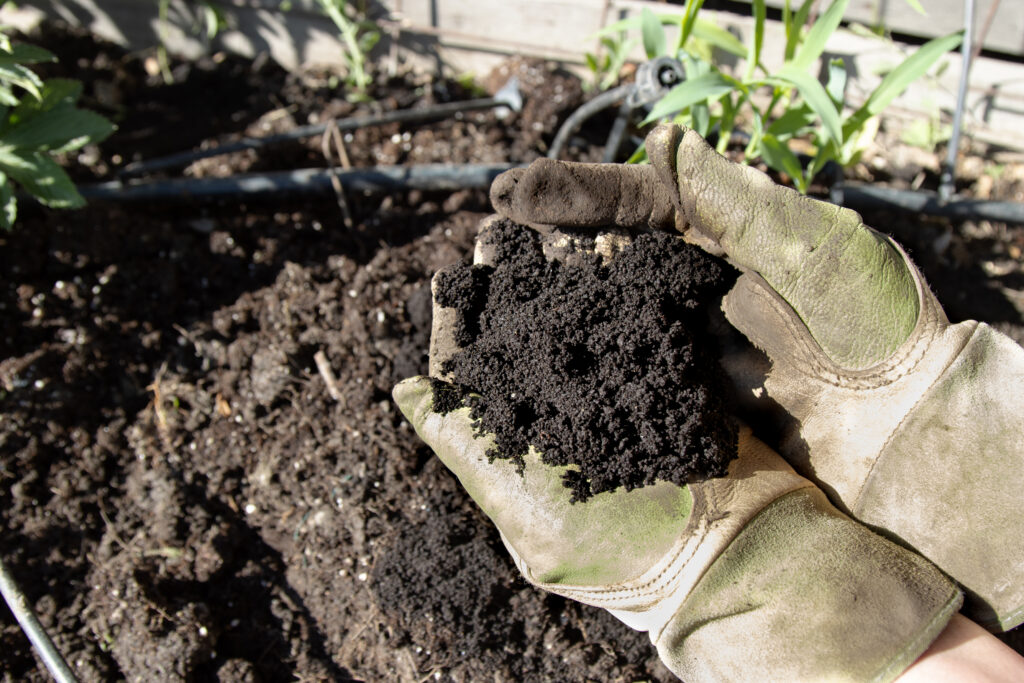
Compost Today. A Healthier Tomorrow.
By composting at home, Berlin Township residents can keep valuable organic material out of the waste stream while creating a useful soil amendment for gardens and landscapes.
Information adapted from the U.S. Environmental Protection Agency (EPA), Composting at Home. For additional information and guidance, visit the EPA’s Composting at Home resource.